
UPI Charge Above ₹2,000: Deferred Till After Diwali — and Who Actually Pays It
The 0.4% fee on some UPI shop payments above ₹2,000 was due on 15 October 2026. NPCI has pushed it to after Diwali. When it comes, it is the shop's fee, not yours.
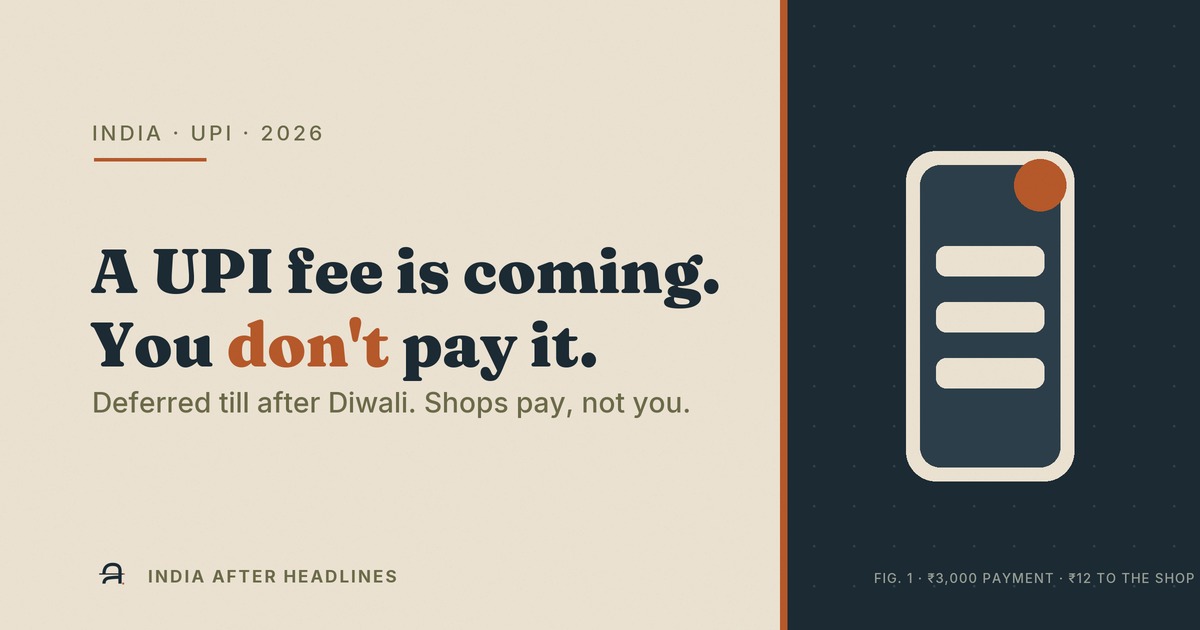
Short answer: no, you will not be charged. A 0.4% fee on some UPI payments made to shops above ₹2,000 was due on 15 October 2026; on 13 October NPCI deferred it to immediately after Diwali, on a date still to be notified. When it starts, it is charged to the shop, not to you. Transfers to people stay free at any amount, and payments of ₹2,000 or less stay free too. The only way this reaches your pocket is if a shop decides to pass the cost on.
The misconception
The headline that travelled fastest was some version of “UPI pe charge lag gaya”. It is the kind of sentence that is technically about UPI and practically wrong about you. It has already sent people looking for ways to split a ₹3,000 grocery bill into two ₹1,500 payments, to avoid a fee they were never going to pay.
What actually changes
Since January 2020, UPI ran on zero MDR. MDR, the Merchant Discount Rate, is the fee a shop pays its bank for accepting a digital payment. That was meant to end for one slice of UPI on 15 October 2026. After requests from merchant bodies and fintechs worried about festive-season sales, NPCI moved it to immediately after Diwali, date to be notified, with the structure unchanged.
Per the Finance Ministry’s own FAQ:
- Who pays: the merchant receiving the payment. Not the customer.
- When: after Diwali 2026, on a date NPCI has yet to announce.
- What: 0.4% on specified person-to-merchant UPI payments above ₹2,000.
- The cap: ₹300 per transaction, which you reach at ₹75,000.
- What stays free: every person-to-person transfer, and every shop payment of ₹2,000 or less. The ministry says that bracket is more than 95% of UPI shop payments.
In numbers, a ₹3,000 payment costs the shop ₹12. A ₹50,000 payment costs ₹200.
The twist
A fee charged to the shop is still a fee. Merchants have two old tools for making a cost disappear from their side of the counter. One is a quiet surcharge. The other is “card/UPI nahi, cash dijiye” above some convenient number, which this time is ₹2,000.
So the thing to watch is not your UPI app; it is the shopkeeper. The official position is that the cost is the shop’s. We could not find a published rule that spells out a ban on passing it on, so we will not invent one. What you can do is ask, out loud, what the extra line on the bill is for.
What to actually do
- Pay the way you always have. Right now nothing has changed at all, and when it does there is still nothing to split or switch off.
- Keep sending money to family and friends freely. That never had a fee and still doesn’t.
- If a shop adds a charge or refuses UPI above ₹2,000, ask why. A question costs less than ₹12.
Sources
- Business Standard, 'UPI MDR deferred until after Diwali, new date to be notified: NPCI', 13 October 2026 — the UPI and Services Steering Committee decided MDR on select P2M UPI transactions will be implemented immediately after Diwali on a date to be notified; no change to the MDR structure; the original date was 15 October 2026. Flat ₹5 for select categories (The Week, 13 October 2026)
- Department of Financial Services (Ministry of Finance), FAQs — Merchant Discount Rate (MDR) on Select UPI (P2M) Transactions, September 2026: 0.4% MDR on specified person-to-merchant UPI transactions above ₹2,000 from 15 October 2026; capped at ₹300 per transaction for payments of ₹75,000 and above; payments of ₹2,000 or less remain free and account for more than 95% of UPI P2M volume; person-to-person transfers unaffected; worked examples ₹3,000 → ₹12 and ₹50,000 → ₹200 (financialservices.gov.in)
- SCC Online, 'UPI MDR explained: No charges for consumers, 0.4% fee on select merchant transactions above ₹2,000', 16 September 2026
- Kotak Mahindra Bank, 'New UPI Rules 2026: What the Latest UPI Charges Mean for Consumers and Merchants' — consumers are not charged MDR; the fee is borne by the merchant
- Background: UPI had run under a zero-MDR regime since January 2020
Does the UPI charge start on 15 October 2026?
No. On 13 October 2026 NPCI deferred it to immediately after Diwali, on a date still to be notified. The fee structure itself has not changed.
Will I be charged for UPI payments above ₹2,000?
No. The 0.4% fee is a Merchant Discount Rate, which is charged to the shop that receives the payment, not to the customer who makes it. Your UPI app should not deduct anything extra from you.
Are UPI transfers to friends and family charged now?
No. Person-to-person transfers are outside this framework and stay free at any amount.
How much does the shop pay?
Once a payment crosses ₹2,000, the shop pays 0.4% of the whole amount, so a ₹3,000 payment costs the shop ₹12 and a ₹50,000 payment costs ₹200. The fee is capped at ₹300 per transaction, which is reached at ₹75,000.
Can a shop add the fee to my bill?
Officially the fee is the shop's cost. Some shops may still try to recover it with a surcharge or by asking for cash above ₹2,000. If that happens, ask what the extra charge is for. We could not confirm a published rule that explicitly bans passing it on, so we are not claiming one.
Should I split a big payment into two small ones?
There is no reason to. The fee is not charged to you either way.
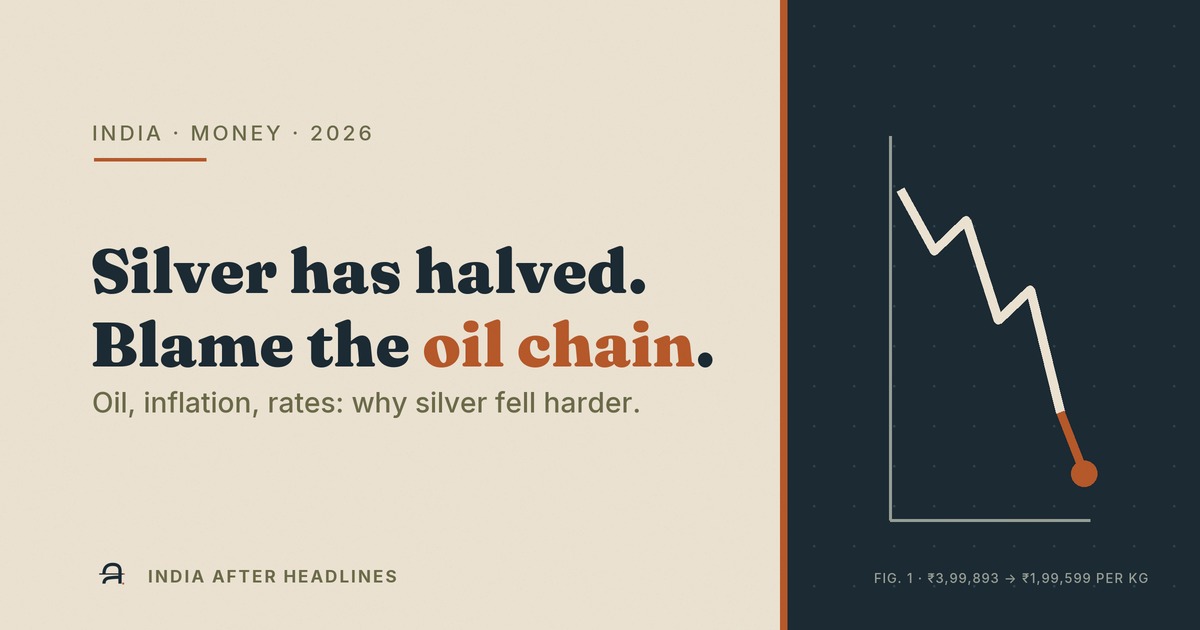
Why Has Silver Halved in 2026? From ₹4 Lakh to ₹2 Lakh a Kilo, Explained
Silver closed at half its January record on 22 October. It wasn't a scam or a collapse in demand for jewellery. It was a chain that started with crude oil.
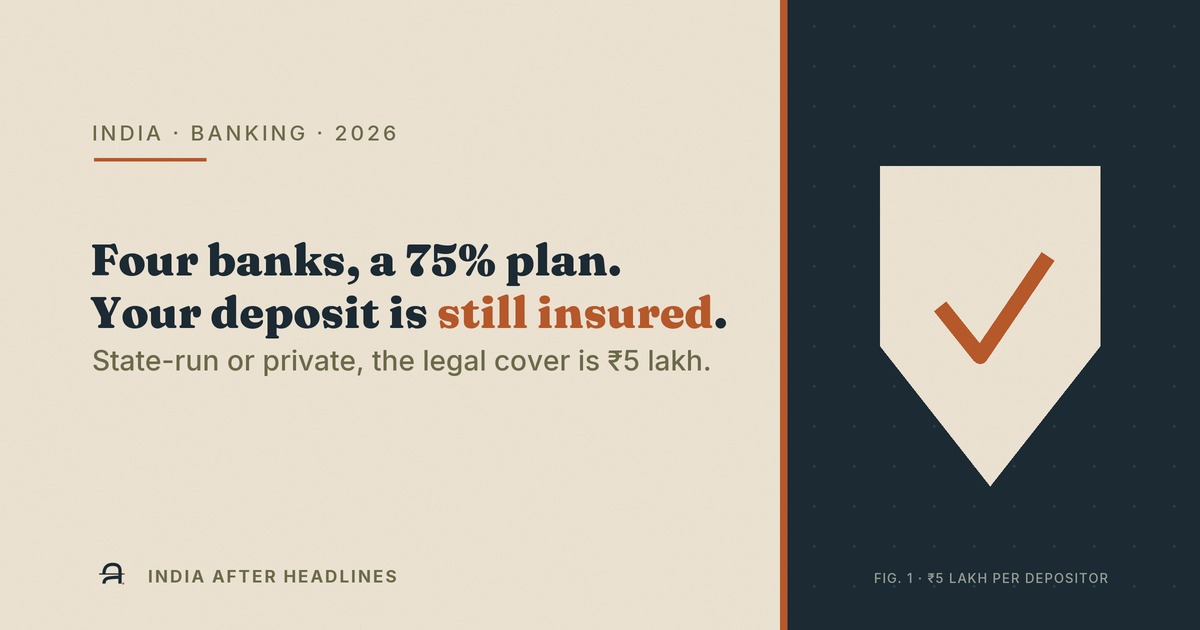
PSU Bank Stake Sale 2026: Central Bank, UCO, IOB, Punjab & Sind — Is Your FD Safe?
After IDBI, the government wants to sell part of four more banks. That part isn't privatisation, and the legal cover on your deposit never depended on who owns the bank.
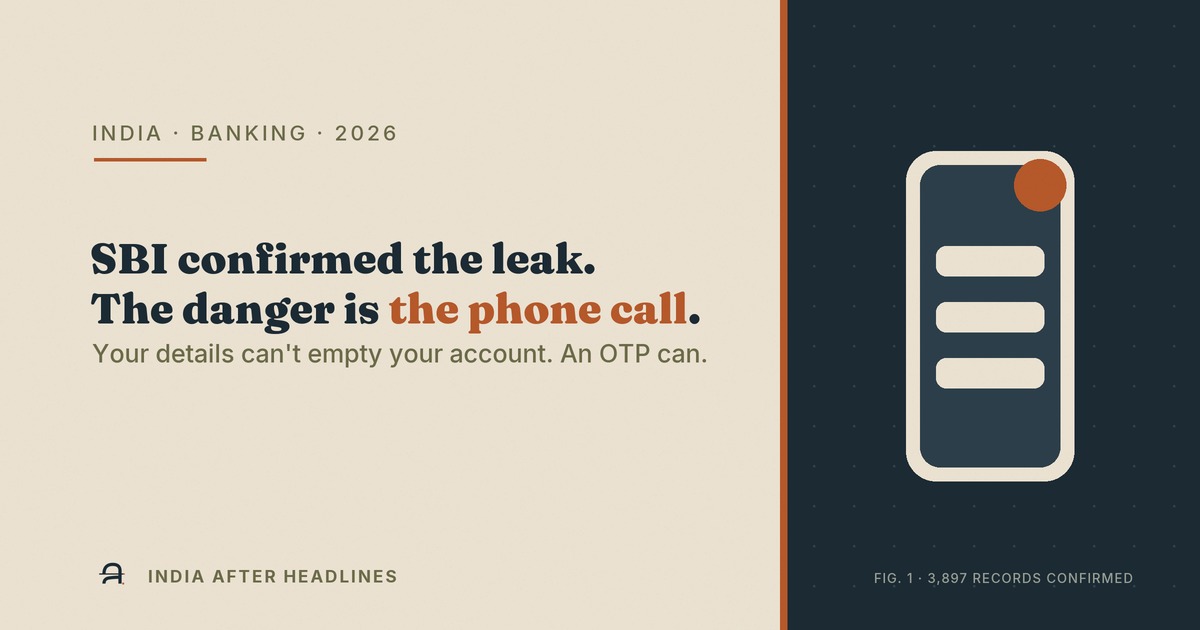
SBI Data Leak 2026: What Actually Leaked, What Didn't — and the Call You Should Expect
SBI has confirmed customer data is on the dark web. It can't open your account. It can make a stranger sound exactly like your bank.